
The hidden history of the Old Lenton Priory buildings

If you have ever wandered down to the Boat Inn on Priory Street in Lenton for a pint, or two, you may have seen some of the buildings of historical note in the area
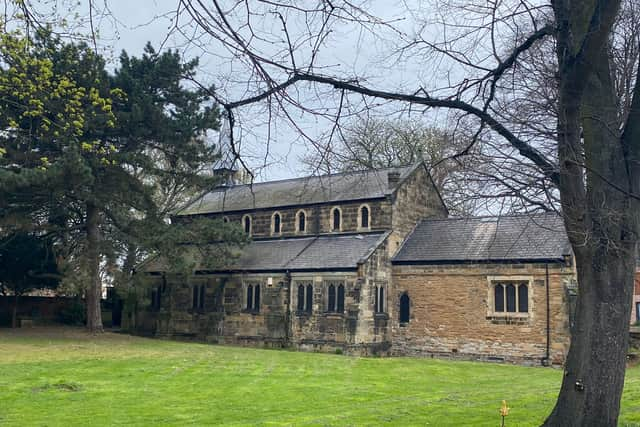
It starts with the building attached to The Boat Inn, which appears closed and has a for sale sign attached, is in a prime area for use by residents and students. After the closed building, there is also a curious mound of stones in the middle of a small field and a beautiful church which is an example of early English-style architecture.
But how are the three buildings and remains connected?
This part of Lenton was once part of a large monastery which is connected to several prominent more modern Nottingham buildings such as Wollaton Hall. In October 2020, a team of archaeologists dug up nearby back gardens in search of what might remain from the monastery.
It had been known as the largest and most prestigious in the country before it fell into ruin. The massive monastery was founded by William Peveril, constable of Nottingham Castle in 1108. Monasteries were part of everyday life for the people of Nottingham at this time as they were involved in everything from health care to education to the arts. Monks were thought to be the holiest people in society and people would donate items to save their souls.
The monastery was dissolved at the request of Thomas Cromwell during the reign of Herny the 8th. As one of the most prominent monasteries in England, it made sense to target Nottingham to strike fear into other monasteries that may not have been as large or guarded. Many of the monks who lives there were accused of treason and killed.

Those who weren’t killed during this time were thrown out of the monastery and the property was given to the king. The Monastery was stripped of its assets which were given to the king.
You can actually view what remains of the monastery but it isn’t much to look at. All that remains now is a circular stump in the middle of a grassy area to the left of the church. The monastery was found to be a good source of stone so many were taken to contribute to other buildings.
This is what connected this part of Lenton to Wollaton Hall because during the sixteenth century, as Sir Francis Willoughby began to build Wollaton Hall, he took stones from Lenton. These stones have been identified by archaeologists and discovered mixed into the building.
Stones also appeared in the church next door to the remaining stump, the Holy Trinity and Priory. Stone has also been discovered by the lake in Wollaton Park taken from Lenton Priory, to build a wall there.
What connects the building to the church and the stump of stones? The priory had several buildings within the walls including a church. The chapel also had a building which was used to treat people with the viral disease, st. Anthony’s Fire. A new church was built on the site of this chapel in 1537.
The church was once the parish church for Lenton before being abandoned in 1842 with the nave pulled down but the chancel and vestry kept. It would remain abandoned until 1883 when the nave was rebuilt then it was reused again. Reports from 1883 detailed the Bishop of Lincoln helping to lay the memorial stone while it was being renovated and celebrating the opening of the nearby Pirory schools.
It had been recognised that a place of worship was badly needed in old Lenton and renovation plans had been in the works for two years before it began. The small chancel could easily seat 60 people yet there were as many as 130 attending services there.
As part of the renovation, it was suggested that architects and builders attempt to keep as much of the original walls as possible but the ‘decayed windows’ would need to be replaced. It was also proposed that the church should aim to comfortably fit about 250 people and repairs would total around 1,800 to 1,900 which in 1883 is a fair amount.
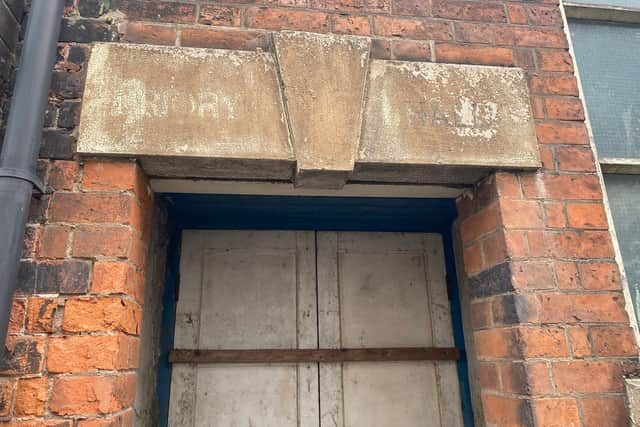
The ‘priory hall’ building across the road next to The Boat Inn appears to have been built in 1826 by the Wesleyan Connexion, which was the predominant methodist group in England at the time. It was then sold to the Primitive Methodists who sold the old chapel to the Lenton Parish Church for £225 and used it as a Sunday school and for celebrations such as wedding receptions.
The church underwent some renovations in 1929 where it was enlarged and electric lights were installed. However, the Lenton Parish Church appears to have run out of the money needed to complete the repairs as a three-day bazaar was proposed in 1930 to help raise the funds. According to newspaper reports, the ‘heavy outstanding debt’ totalled £600. The school was badly needed as there were currently 600 children on the church school books but the hall, even after renovations, would only hold 200.
It is unclear what happened to the hall, who owns it or what the future of it will be. The current owner did not wish to speak on the future of the hall. The church however has been in use ever since it was renovated.
There appears to have been very little other than weddings, births and deaths reported at the church in the following years. However, there was one report from 1974 which was a little, odd. A curate, scoutmaster and two churchwardens were left standing on the edge of a pit as the Reverend Reg Dunford was plunged 12 feet into the hole. Thankfully he escaped with only a bruised finger and launched an investigation into other ‘mysterious holes in the area.
While the church was mostly treated with respect over the years, it was part of a series of church break-ins in the mid-eighties. Thieves forced the rear window open before stealing a chalice bowl, two silver chalices and a silver plate. It is unclear if they were ever returned.
The church celebrated 150 years of worship in 1992 with a special ceremony and service. It noted that prominent Nottinghamians of note had worshipped there especially during the second world war including Thomas Adams, a lacemaker and World War One fighter pilot, Albert Ball VC. There was once a plague dedicated to the local pilot in the church.