
Swingate Water Tower: The truth behind this mysterious tower just outside Nottingham

If you've ever driven on the M1 you've probably spotted the abandoned tower
If you’ve ever driven on the M1 past the town of Kimberley, just outside Nottingham, you may have noticed an unusual tower in the distance.
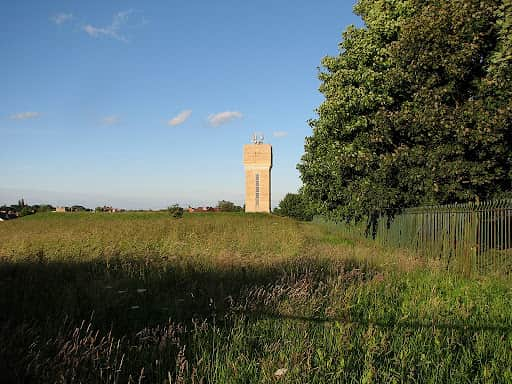

Standing at 30 metres high, the Swingate Water Tower can be seen from miles around.
Despite its striking neo-Georgian design, the tower was actually constructed in the 1940s and became operational in 1950.
Read more: Love Nottingham
Standing dominant in the small village of Swingate, the water tower was built to provide a more reliable supply of drinking water for Nottingham after the Second World War.
To keep up with Nottingham’s growing demand for water post-war, a huge covered reservoir was built directly behind the tower.
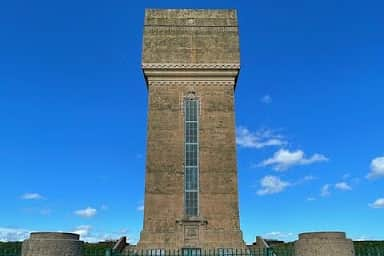
The reservoir had a capacity of 4 million gallons, and the water tower was topped with a tank capable of holding 80,000 gallons.
The development was officially inaugurated on January 11, 1950 in a ceremony led by the Lord Mayor of Nottingham.
For seven decades the tower was key in maintaining a water supply for suburbs on the outskirts of Nottingham, including Broxtowe, Bilborough and Strelley.
In 2022 the tower was decommissioned after more than 70 years of use.
A year later, Historic England awarded the tower Grade II listed status.
A local landmark
The list entry reads: “The use of artificial stone to create classically-inspired decorative elements elegantly articulates the expansive wall surfaces of the tower and shaft, and paired with the stylish flights of steps which are integrated with the tower at its base, the water tower forms an unusually architecturally-refined ensemble which goes far beyond what would be necessary merely for utility.
“This is in contrast with most post-war water towers, which were generally utilitarian structures of reinforced concrete, designed principally with practical considerations in mind.”
The tower is now fondly considered a local landmark and is often visited by walkers and cyclists, attracted by its unusual design.