


You might walk the streets of Nottingham every day and not notice the architectural gems the city has to offer.
You see shop fronts, inviting restaurant facades, and modern office buildings. But most of these are conversions - new designs added at street level.
It’s only when you look up that you see the grand buildings that they occupy. And Nottingham is rich with splendours from the Victorian, Georgian, Gothic Revival and neoclassical eras, and many buildings even older.
Many of the city’s finest buildings are the children of two architects in particular, neither of which will need any introduction to Nottingham architecture buffs.
Some of Nottingham’s most unusual and ornate buildings came from the drawing board of Watson Fothergill, a prominent late Victorian architect who set up a studio on George Street.
Many more were designed by Thomas Chambers Hine, better known as T. C. Hine, who was responsible for large swaths of the city centre and The Park Estate.
But these two illustrious 19th and 20th century architects were themselves sitting on the shoulders of some visionary designers whose buildings still stand today.
Here’s a small selection of some of Nottingham’s most prestigious and quirky historical buildings:
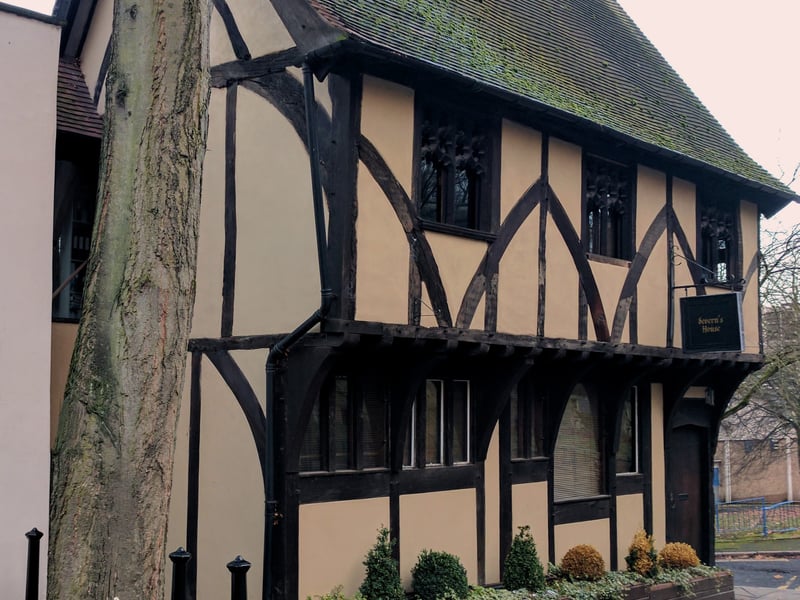
5. Severn's Building
But there is an even older building in the city, one that has a suitably quirky story to tell. You might have noticed a quaint little house situation on the corner of Castle Gate, either on a trip to the Castle or, down the hill, to the Old Trip to Jerusalem. It’s hard to know which is more remarkable: the fact that this building dates back to the mid- 15th century, perhaps even to before Elizabeth I’s time on the throne, or that it was actually moved piece by piece from its original location. The first location for this eccentric little building was in fact Middle Pavement, around the site of the Paul Smith store there today. Over the centuries it changed hands, with occupiers from local architects to wine merchants, and there it stayed until it was damaged during a bombing raid in WWII. Skip forward to the 1960s, and rather than let it go to ruin, Nottingham City Council decided to dismantle the Severn's Building and have it rebuilt and restored in an entirely new location - close to the Castle, where, if you have a long memory, it was the site of a lace museum. | Benedict Cooper