
Nottinghamshire Day 2023: The history of the event and the region's heritage

You might not know it, but August 25th is the anniversary of one of the most important moments in British history - and Nottingham’s major role in it.


It was on this day in 1642 that the English Civil War effectively began, with the gathering of King Charles I’s army on what’s today known as Standard Hill.
Accounts of the era tell a gloomy and portentous story of what followed. Later that night a violent storm descended on the largely Royalist town of Nottingham. As the people huddled in their houses, sheltering from the lashing rain, high up on the castle rock a sharp gust of wind ripped the King’s standard from its pole and cast it off into the night, never to be seen again.
War was looming, and for Charles, this was an ominous sign. He was executed less than seven years later.
The historic moment is marked in the modern city only by the naming of the hill and a small plaque hidden away on a side street near Nottingham Castle. But its significance lives on.
Not least in the choice of August 25th as Nottinghamshire Day, a celebration of the county’s rich identity, past and present.
Nottinghamshire Day
This is only the third Nottinghamshire Day, the first event being held in 2021. Various events will take place around the county, including a hopefully less eventful flag-raising ceremony out at County Hall this morning [Friday].
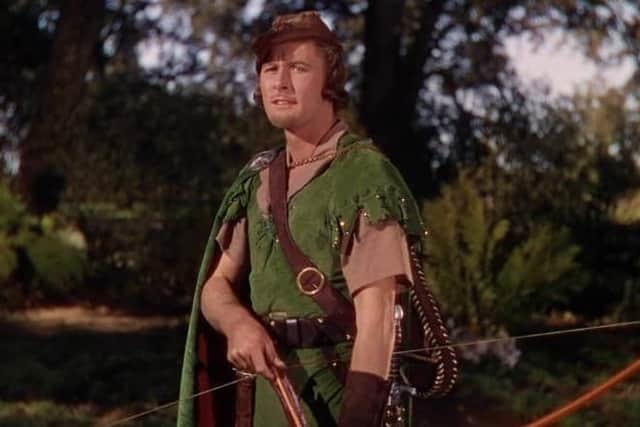
Nottinghamshire Day 2023 also coincides with the last weekend of the free-to-enter Robin Hood Festival out at Sherwood Forest, complete with battle re-enactments and performances by The Sherwood Outlaws.
And this year the organiser’s are planning to make the celebrations more “in person”, starting with honouring two prominent Nottinghamians from the past century, suffragette Helen Watts, and Britain’s first black magistrate, Eric Irons OBE.
Back in time
These remarkable lives take their rightful place in Nottinghamshire’s rich history. The history of Nottingham itself goes back 1,500 years, to the first Saxon settlement, on the site of the modern Lace Market.
A settlement became a town, and with the many invasions and new arrivals to Britain’s shores over the proceeding centuries, so the town changed. With the Viking invasions of the late 9th century, Nottinghamshire briefly became part of what was known as Danelaw - a region of the Midlands governed by Danish law.
The subsequent reclaiming of the land, and the unification of England under one Saxon ruler, was only a precursor to a new era that began with the Norman invasion in 1066.
With that the age of knights, stone castles, medieval kings, and Nottinghamshire’s most famous outlaw dawned. However true the tales of Robin Hood are, the documented history of Nottinghamshire is equally gripping.
While the remaining Saxon population stayed in the area around the original settlement to the east of the town, the arriving Normans established a base around the newly-built stone fortress on the famous castle rock.
For generations the two peoples of Nottingham lived largely separate from and distrustful of each other, each on their own high settlement either side of the valley between the Lace Market and the Castle.
They were willing to trade, but only on neutral ground. The result of this historical quirk is the beating heart of Nottingham: the Old Market Square, established on a patch of land between and distinct from either of the town’s main populations.
Buildings to be proud of
Outside of the city, Nottinghamshire boasts some of England’s most magnificent historical buildings, each with a fascinating tale of its own.
So rich was the county with grand country estates - and no less than four ducal seats - Nottinghamshire was once home to an area known as the Dukeries.
Those estates once belonged to the Dukes of Norfolk, Portland, Kingston and Newcastle - the latter also being the owners of the ducal palace more commonly known as Nottingham Castle - and they have all been dutifully preserved. The three houses still standing, Worksop Manor, Welbeck Abbey, and Thoresby Hall, are some of the finest in England.
It’s not just because of Robin Hood that Nottinghamshire has gained a rebellious reputation. The county has produced some great authors in anyone’s book, but they are known for their wilder literary ways - just take a look at the lives of D H Lawrence, and ‘Mad, bad and dangerous to know’ Lord Byron. Byron’s former home, 12th century Newstead Abbey, is a historical gem of the county.

And for another eccentric Notts character see the story of the 5th Duke of Norfolk, who in the 19th century gained a reputation for his extreme reclusiveness and bizarre experiments digging tunnels and chambers underneath Welbeck Abbey. It’s all there in a special exhibition in The Harley Gallery at Welbeck.
Nottinghamshire has its quirky stories like these. And its world legends. The stories of the Sherwood outlaw have spread around the world, and all English historians know the significance of Nottingham Castle for the Civil War alone - fewer might know that the castle is where Richard III spent one of his last nights on earth, before riding south over the River Trent, to his terrible fate at Bosworth.
But there are plenty of local tales, past and present, that only we know and love. Celebrating them all alongside the heritage, culture, and identity the county has to offer today is what Nottinghamshire Day is all about.