
Sutton-in-Ashfield: Human remains discovered in field identified as dad-of-six who went missing 56 years ago
Father-of-six Alfred Swinscoe identified five decades after he went missing from Derbyshire mining village
Human remains found in a Nottinghamshire field have been identified as a miner who went missing 56 years ago.
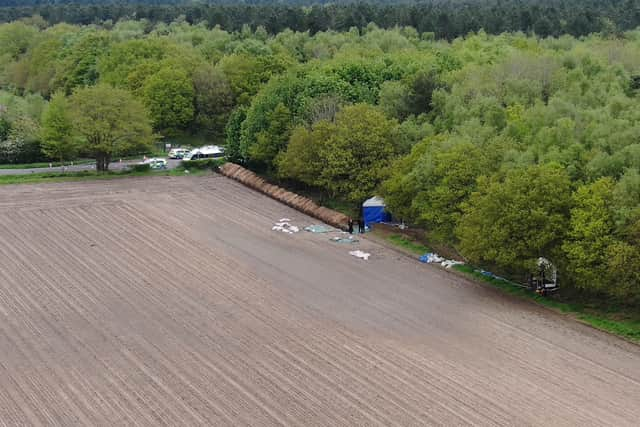
Nottinghamshire Police were called to farmland near Coxmoor Road in Sutton-in-Ashfield when the remains were discovered by a construction worker on April 26.
A murder investigation was launched on May 24 and officers have now confirmed the bones are father-of-six Alfred Swinscoe.
Officers believe Mr Swinscoe was killed and buried in farmland around four to six-foot deep.
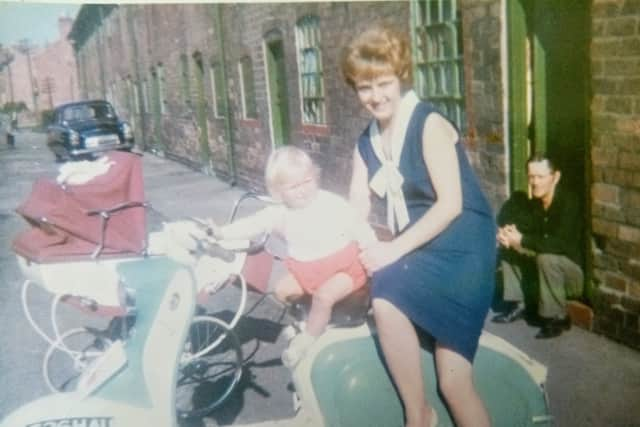
Russell Lowbridge was four-years-old when his grandfather Alfred went missing in early 1967 in “mysterious and unusual circumstances”.
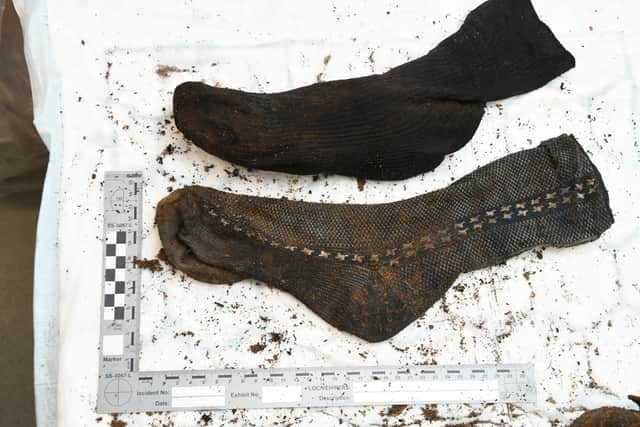
The 60-year-old contacted police when pictures of an odd pair of socks were released which evoked childhood memories for Mr Lowbridge, who “had a distinct feeling [he] had seen them somewhere before”.
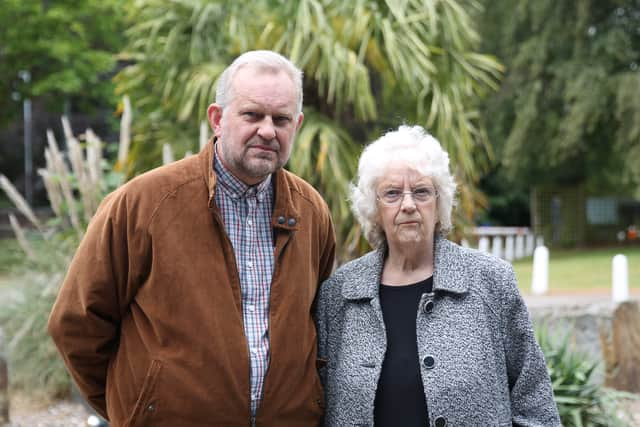

DNA tests were carried out on Mr Lowbridge and Mr Swinscoe’s son, now in his 70s, and matched against the bones exhumed from the ground.
Alfred Swinscoe, who was 54 when he went missing, is believe to have been murdered, police say, due to the injuries he sustained and “multiple trauma areas” to parts of the skeleton.
‘Incredible pain and sadness’
At a press conference on Thurday, Mr Lowbridge said the discovery “has filled out family with very mixed emotions”.
He added: “Relief that we can finally put my grandfather to rest but incredible pain and sadness to uncover what had happened to him.
“He was murdered and then buried so no one could ever find him.”
Mr Lowbridge said his grandfather’s disappearance “tormented” Mr Swinscoe’s son Gary, who died in 2012, “never knowing what happened to his dad”.
“He just remembers his dad giving him a 10-bob note in the pub that night - telling him to get a round and then never ever seeing him again.
“It completely broke him.”
Mr Swinscoe’s daughter Julie, 82, said she “doesn’t want to go to her grave” never knowing what happened to her father.
She said the news “has completely broken her”.
“I was 25 at the time,” she added. “A factory worker and I remember coming home one day from work and people saying they couldn’t find dad. He had gone missing, and the police were searching.
“We never expected that the remains found in Sutton would be him. I practically went hysterical. I said: ‘he can’t have lay in that field for 56 years and no one could find him until now.’”
‘Hard-working and respected’
Described as a “hard-working and respected” man, Alfred Swinscoe lived in the village of Pinxton, on the Derbyshire and Nottinghamshire border when he disappeared.
He worked at Langton Colliery from the age of 14 as a “cutter”, known for operating machinery that cut large chunks of coal from the coal face to be broken down.
Mr Swinscoe was nicknamed the “Sparrow” and was also known as the “Champion Pigeon Man of Pinxton”, due to his love of pigeon racing.
Four of his six children are still alive and he has a number of grandchildren, a police spokesperson said.
He was last seen at work on January 20, 1967 and his last known sighting was at the Pinxton Miners Arms in Church Street West - a pub that was popular with the mining community.
It has since closed and was converted into a house, which is a “short drive” from where Mr Swinscoe’s remains were discovered.
Police believe Alfred was drinking with his two sons and friends at around 10.30pm when he handed Gary money to buy a round of drinks and had gone to use the outside toilet, but was never seen again.
Assistant Chief Constable Rob Griffin said: “I cannot imagine how distressing this must have been for Alfred’s family who have been waiting 56 years for answers.
“Some of Alfred’s family members are no longer alive and will have died never knowing what happened to their loved one that night.”
Nottinghamshire Police said further forensic tests are being carried out to determine how Mr Swinscoe was killed and for how long he had been buried.
Work is also being carried out on clothes found with the remains, including a distinctive odd pair of socks and a shoe.
Mr Griffin added: “Despite this being a crime that happened more than 50 years ago this will not stop us from using all the investigative skills at our disposal to find those responsible.
“His killer left them with decades of unanswered questions about what happened to their loved one. We hope with the public’s help we can put that right.”