
Matthew Hollingworth spent six months spearheading the World Food Programme’s response to the Gaza crisis last year before moving to Lebanon, which is also now caught in conflict.
The United Nations organisation’s life-saving aid for civilians in Gaza has been backed by £14.25million support from the UK Government since October 2023.
Foreign Secretary David Lammy has been leading calls for more aid to enter Gaza and Matthew, 49, has seen first-hand the desperation of people suffering extreme hunger and malnutrition.
Matthew said: “There is no crisis in the world like Gaza. In my 25 years of service in humanitarian crises all over the world, I’ve never experienced anything as challenging as Gaza. It is beyond comparison.
“I’ve worked in war zones as aggressive, as violent and as frightening – but the big difference is that when the lead is flying and bombs start dropping, people can usually move away.
“The awful thing about Gaza is there is nowhere to move to. The entirety of that tiny 25-mile strip is a war zone and no man, woman or child can escape its intensity.
“I still find it hard to comprehend the level of desperation and hunger, fear and isolation that the people were experiencing.
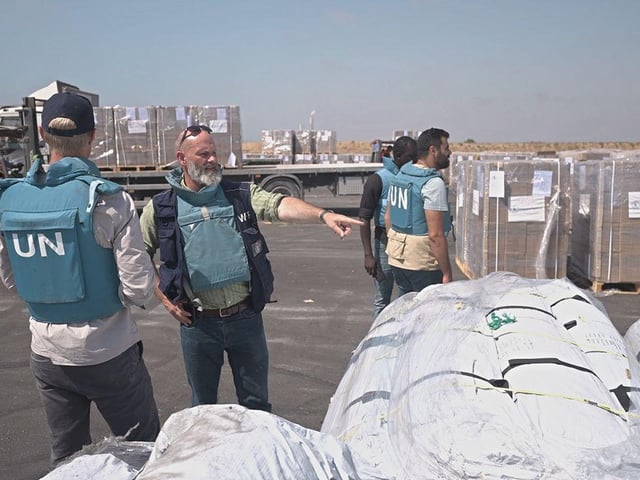
“When we crossed the frontlines into Gaza City with aid, we had people running towards our convoys to snatch a packet of food off a truck, risking being fired upon by machine guns.
“People were dropping to the floor with gunshot wounds but still people would run towards us just to try and get a can of beans. The hunger was so extreme.”
Matthew added: “I’ll never forget asking a child queuing at a WFP bakery what were his dreams for the future. You expect a child to say something like ‘I want to be an engineer or a doctor or a footballer’ or ‘I want to go on holiday’.
“But his response was simply ‘I dream of having a chicken sandwich’. When I asked when he’d last had a sandwich with any kind of meat, he could not remember.”
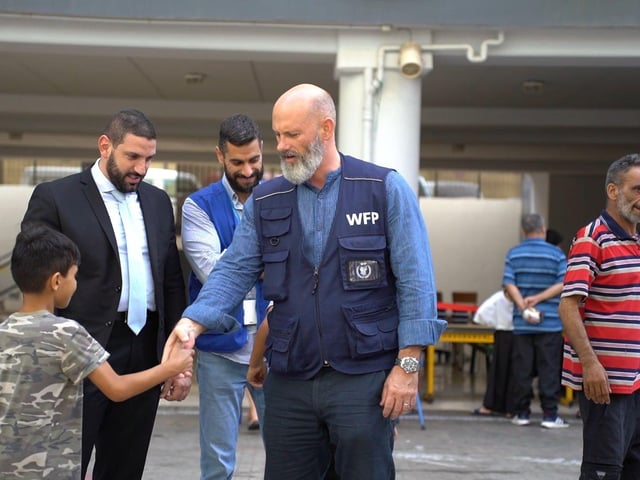
Far-travelled Matthew is from a military family. He was born in Nottingham and attended Gordonstoun boarding school in Scotland, where King Charles also studied. The dad-of-three now lives in Beirut with his Lebanese-American wife and works as the World Food Programme’s Country Director for Lebanon.
Just two months after Matthew returned from Gaza last July to start his new role in Beirut, Israel launched an incursion into Lebanon to pursue Hezbollah.
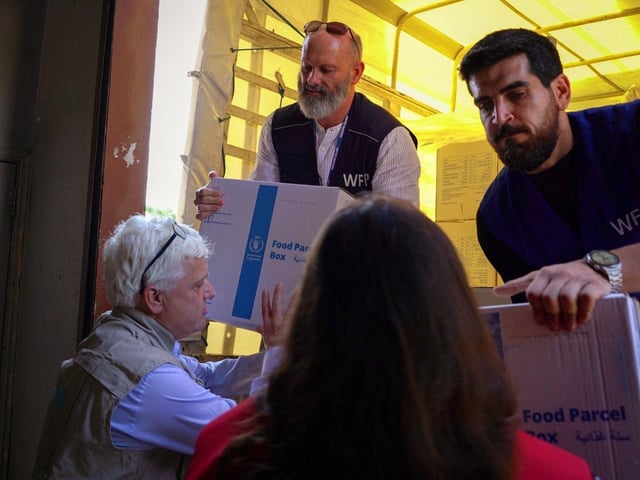
Matthew and his WFP team helped provide assistance to almost one million civilians displaced from southern Lebanon.
The UK Government announced £15million in humanitarian support to provide Lebanon with essential medical supplies, emergency cash assistance and, shelter and access to clean water, including £10million to the WFP.
The tentative and fragile ceasefire is looking increasingly shaky with Israel attacking locations in the Lebanese capital Beirut at the end of last month.
Matthew said: “Sadly, explosions are all part of life in Beirut. The latest bombings happened in another suburb, but you can certainly hear them when it happens.
“To be honest, after so many years of working in conflict zones you can identify what kind of munitions are being used, and how far away they are to assess how to response appropriately to the risk.
“Sadly, I’ve had too many close shaves in several countries over the past 25 years. I lived through the Baghdad bombing at the UN mission based at the Canal Hotel in 2003, which tragically killed 23 UN staff.
“I was part of the UN team in Syria that was pinned down for eight or nine hours as the Siege of Homs was broken. We were hiding in basements of bombed out buildings, while the place was being mortared and sniped at until we finally managed to negotiate a way out.
“Over the years I have gotten used to going to sleep to the staccato of gunfire and ‘crump’ of shellfire. Unfortunately, places where the aid sector is focussed these days are by their very nature difficult and dangerous but that’s where people need our help the most.
“That is why we are there, but whatever we go through, the local population suffers far, far more.
“I think 25 years ago, we had a lot more confidence that a Red Cross or a UN emblem would be some kind of guarantee of safe access and movement. Increasingly that is no longer the case and the term ‘collateral damage’ is more and more of a reality for humanitarian workers operating in war zones.”
Matthew is strongly motivated by seeing with his own eyes the impact humanitarian aid has on the ground.
The UK Government announced £17million in humanitarian funding on January 28 to ensure healthcare, food and shelter reaches tens of thousands of civilians and to support vital infrastructure across the Occupied Palestinian Territories.
In total the UK has announced £129 million this financial year, including £12million to the United Nations’ Office for the Coordination of Humanitarian Affairs (OCHA) and the WFP.
The UK has pledged to help the WFP to procure a further 4,465 metric tons of fortified wheat flour to help 451,000 severely food insecure people across Gaza for the financial year 24/25.
Matthew said: “I’ve had many challenging days in the last 25 years of being in this line of work, but I’ve never had a period where I didn’t genuinely see the impact of what we are doing and feel that what we are trying to achieve is worthwhile.
“The funding we’ve received from donors like the Foreign, Commonwealth & Development Office (FCDO) has made a massive difference because without this humanitarian support from the international community things would undoubtedly be even worse.
“Where are we right now? We are at the point where people are ever more despairing because of the lack of basic goods getting into Gaza - flour, beans, vegetable oil, clean water.
“We know what we can achieve if we can get our trucks in through every possible entry point. We have the means to provide hot meals and help bakeries to reopen. We have the resources to do our job – to feed the population.
“I came out of Gaza to return to Lebanon, only for the war to start here shortly after I arrived. In total, one million people were displaced from South Lebanon — the majority within just two to three days of the Israeli incursion starting.”
“Lebanon is in a precarious position. A country grappling with the aftermath of conflict, prolonged economic collapse, and deepening food insecurity.
“With the ceasefire in place, nearly a million people returned to their communities – most to damaged homes, limited services, and uncertainty about when their lives can return to normal
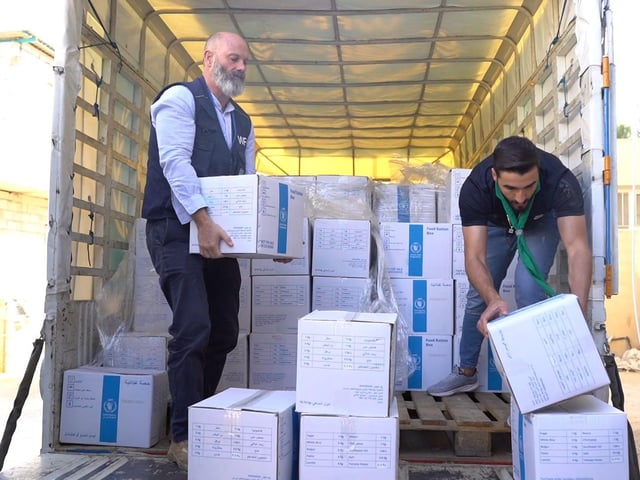
“WFP supported more than 700,000 people with food assistance throughout the 66-day entirety of the war. We are able to make a difference – and save lives.”
1. Contributed
Matthew Hollingworth spearheading WFP humanitarian response in Lebanon Photo: Submitted
2. Contributed
Matthew Hollingworth spearheading WFP humanitarian response in Lebanon Photo: Submitted
3. Contributed
Matthew Hollingworth spent six months in Gaza last year Photo: Submitted
4. Contributed
Matthew Hollingworth spearheading WFP humanitarian response in Lebanon Photo: Submitted