
Artistic director Guillaume Pigé on his critically acclaimed show BIRTH
BIRTH, Theatre Re’s sell-out Edinburgh Fringe 2019 hit, is a poignant visual piece of theatre that deals with the under-represented experience of pregnancy loss. BIRTH delves into the bond between three women from the same family, their shared loss, and their unconditional love, as well as the strength they discover in each other. This performance is on at the Nottingham Playhouse on 17th March.
Hi Guillaume, how are you?
All good. Thank you for taking tbe time to chat with me.
You’re bringing your Edinburgh Fringe hit-show BIRTH to Nottingham this coming March. Could you tell us a bit about the show?
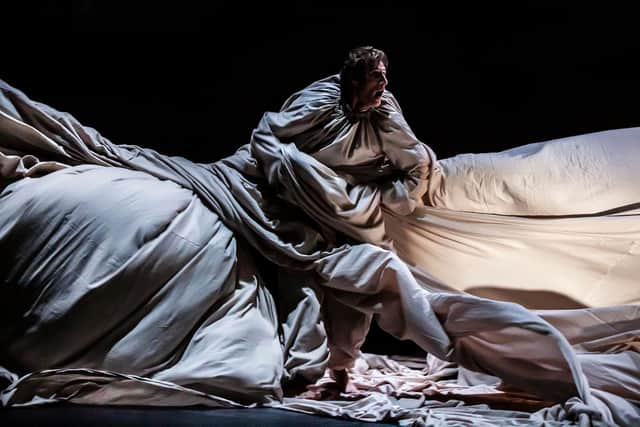

BIRTH is a powerful piece of visual theatre with original live music about what it means to lose and create a new life. It is deals with family secrets, parenthood, loss, life and birth of course. We follow the journey of Emily, who is six months pregnant when she first reads her grandmother's journal. As she delves into the depths of her family history, it's pages trigger a shift in her sense of reality, unveiling a legacy of unspoken tragedies, courage and unconditional love. Through her story, we portray what is being passed down from one generation to the next.
You collaborated with a professor and lecturer from UCL and University of Kent – how important was this to creating this performance?
This is very much part of Theatre Re's way of making work. Every time we start a new project we try to collaborate with a wide range of people (theatre and non-theatre makers) to help us make the show.
Professor Kate Jeffery and Dr Graeme A. Forbes shared their views on our original question: when does memory begin? These discussions fueled our very first steps forward and we used them as triggers.
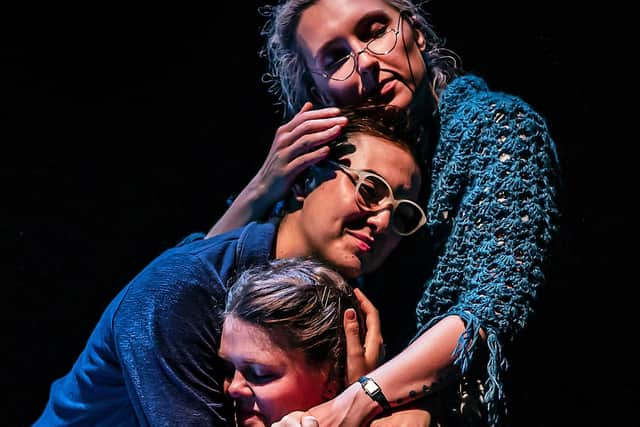
Both also came back into the rehearsal room at different stages to follow the development of the work and kept feeding us with ideas, feedback, and more generally, things that we could not have thought about if they had not been present.
Later in the process we also engaged with Aching Arms (a nationwide baby loss charity run by a group of bereaved mothers) and were able to get an insight into what it means to loose a life. Their feedback on the work helped us ensure that our piece was a faithful representation of what some women and families go through without being patronising nor sentimental.
And what was the most interesting thing you learnt speaking to them both?
I remember quite clearly a discussion with Dr Graeme A. Forbes about the non cyclical nature of time and how this led to us using different birthday cakes for each recurring Birthday in the show.
BIRTH first appeared on stage in 2019 – has the show adapted at all since then?
All our pieces are constantly ‘in-development’ in the sense that they have to keep changing, evolving and growing in order to stay alive. The performers are always making new discoveries, and building new connections. The cast has also changed since 2019, and this is a beautiful opportunity for us to revisit, question and even challenge some of our choices, and make are the piece remains fresh and relevant.
Theatre Re is known for creating emotional and thought-provoking pieces through physical theatre. How difficult is it to translate these emotions into non-verbal art?
I don’t think we are translating anything. We are performing actions with a clear attention to details such as rhythm, space, shapes…etc
And it’s the specificity of these actions that allow the audience to project their imagination into what we are doing on stage. Also, I wouldn’t say that our work is ‘non-verbal’. We do speak and use voice quite a lot, it’s just that the live music covers the sound of the voices. For us it’s really about developing a frame within which people will be able to project their own emotions and imagination. The challenge is to make sure that that frame is specific enough for people to not fall into the world of abstraction (it would become a very cerebral exercise) and open enough so that everyone can come join in.
From your touring pieces – Moments, The Nature of Forgetting, BIRTH and Bluebelle – was there one that has stood out to you as the hardest to create?
Every piece comes with it’s own set of challenges and difficulties, and actually the problems that we encounter and that we have to wrestle with for each piece is what makes that piece unique and special. At the start of a process, we are very much looking for problems, as it is in solving these very concrete problems that little by little a new piece emerges. However, to answer your question, I would say that Bluebelle was probably the hardest piece to make but only because we made that show during Covid.
You can buy tickets for this show on Modnay 17th March here, https://nottinghamplayhouse.co.uk/events/birth/